


.
Counting Breaths Not Syllables
.
.
old pond
a frog jumps into
the sound of water
.
– Matsuo Basho translated by Jane Reichhold
.
The scene doesn’t ask to be explained. It asks to be noticed. Haiku begins here.
.
Most people encounter haiku as a poetic form—seventeen syllables, three lines, two contrasting images drawn from nature, a seasonal reference, descriptive rather than interpretive adjectives and adverbs – characterized more by what it lacks; no punctuation, no capitalization, no rhyme, no fancy diction, with more empty space on the page than words. Rather than a rigid formula, haiku is a flexible art. It’s liberating to learn that what many of us recognize as “haiku” is a translation and so a transformation. The 5–7–5 syllable count is a Western approximation; Japanese measures sound units differently, so ha-i-ku is three units in Japanese, while hai-ku is heard as two syllables in English. Similarly, the three horizontal lines we associate with haiku are a Western convention. In Japanese, haiku are written on a single vertical line, with segments that are implied, not specified. Contemporary practitioners have expanded forms in other languages into new territories, from single-line monoku – “three vultures circling invisible venn diagrams” to extreme minimalism, such as Michael Alpert’s “adrift within” or Cor van den Heuvel’s one-word poem “tundra.” The result is less a fixed structure than a field of possibility with constraints that invite, rather than confine. Because it’s so short, it’s the easiest form of poetry to practice. Not unlike using a camera, virtually instantaneous, a haiku can be crafted in a moment and spoken in one breath.
.
Haiku is less a literary exercise than a discipline of attention. Its limitations are instruments. They tune perception. In this way, haiku belongs as much to mindfulness as it does to poetry. To write haikai is to practice noticing. Not remembering, not imagining, not analyzing—just noticing. The form redirects the mind from abstraction to sensation. What’s here, now? What can be sensed before thought rushes in to name, categorize, and explain? Immersed in sensation, haiku stops at the threshold of making sense – and makes another kind of sense.
.
At the heart of haiku lies the cut—a pause, a gap … a silent hinge between two images or perceptions opened by breath. This is where awareness deepens. The cut is not an absence but a presence: the space in which the mind momentarily stops grasping. In that pause, something else becomes possible. Not meaning imposed, but meaning arising. This is the discovery that breathes life into every form of art, its practitioners, and its participants.
.
Haiku trains attention by narrowing it. It leaves no room for excess; only the essential remains. Its compression isn’t reductive; its clarifying. Like a lens brought into focus, our perception of the world grows sharper when we distill it.
.
Equally important is what haiku leaves out. There is rarely an “I.” The poet recedes, or dissolves entirely, into the act of observation. This is not erasure but a shift in orientation. Attention moves from self-centered to world-centered. The boundary between observer and observed softens. A butterfly drifts; awareness drifts with and within it.
.
Like meditation, haiku is easy to practice, there’s no right way to do it, and it’s challenging to do well, making it infinitely rewarding. Try practicing haiku, write one a day, but rather than setting a time to write, simply be alert and ready to catch the surprising insights you’ll find in the simplest things whenever you notice them. They’re happening all the time. After decades of practice, haiku continues to change my life. It might change yours, too.
.
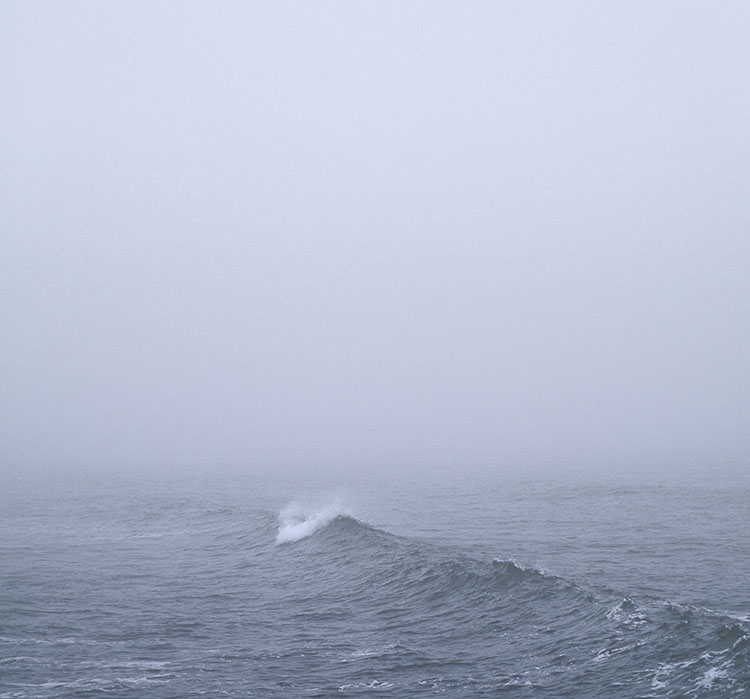
under a waking mind
another sleeping
and then an ocean
.
– John Paul Caponigro
.
.
.
Looking for books on writing haiku poetry? Here’s a list of books that I recommend.
.
Six on writing and enjoying haiku.
.
1 Haibun A Writer’s Guide by Roberta Beary
2 Writing and Enjoying Haiku: A Hands-on Guideby Jane Reichhold
3 Haiku: A Poet’s Guide by Lee Gurga
4 The Haiku Handbook: How to Write, Share, and Teach Haiku by William J. Higginson
5 The Haiku Seasons by William J. Higginson
6 How to Haiku: A Writer’s Guide to Haiku and Related Forms by Bruce Ross
7 The Heart of Haiku by Jane Hirshfield
.
Three outstanding collections of haiku; two historic and one contemporary.
.
8 The Sound of Water: Haiku by Basho, Buson, Issa, and Other Poets translated by Sam Hamill
9 The Classic Tradition of Haiku: An Anthology by Faubion Bowers
10 The Haiku Anthology edited by Cor van den Heuvel
.
Plus a collection of tanka.
.
11 The Forest I Know by Kala Ramesh
.
.
Listen to my conversation with Natalie Goldberg here.
.
Sorry, the comment form is closed at this time.